House Cleanout After Death
Pricing at a glance
Clearing a house after a death runs $800–$2,500+. A smaller home with moderate contents starts at $800; a larger multi-level home with a packed basement and garage typically runs $1,500–$2,500+.
| Home | Typical price | Includes |
|---|---|---|
| Small / moderate contents | From $800 | Whole home, broom-clean finish |
| Multi-level, packed | $1,500–$2,500+ | All levels, basement, garage |
| Donation sorting | Included | Usable items separated first |
We can work with out-of-town family by photo and video, with no one on site.
Final price depends on volume, access and disposal weight. Call (630) 735-8700 or text a photo for a firm quote before any work starts.
What families and executors should save, sort, donate, sell, and remove before an estate property is cleared.

Dumpster Rescue LLC
Family-sensitive cleanouts, donation sorting, furniture removal, and text photo quotes
Quick Answer
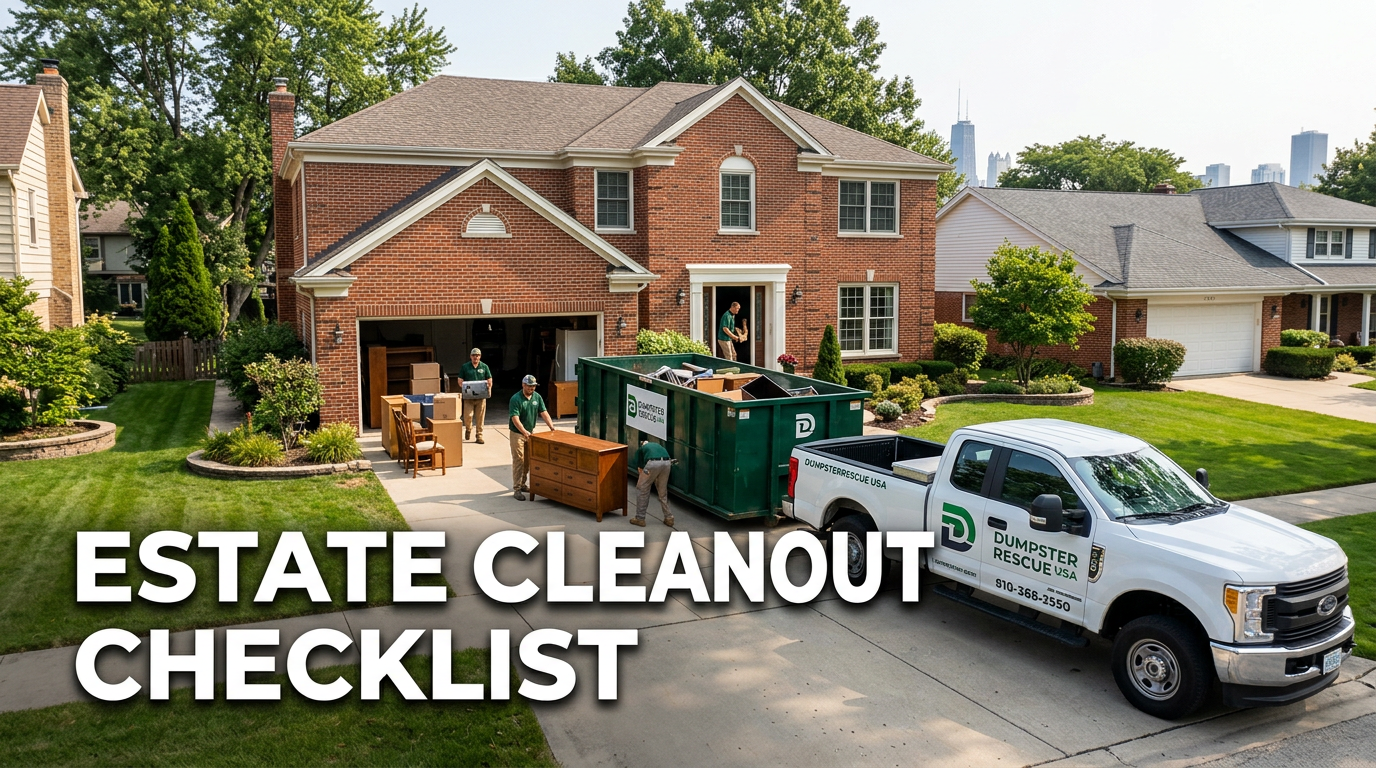
Cleaning out a house after a death should start with documents, valuables, medications, photos, keepsakes, and family items. Once those are separated, an estate cleanout crew can remove furniture, boxes, basement storage, garage contents, donation items, and estate sale leftovers.
Cleaning out a home after someone dies is not just a junk removal job. Families are dealing with grief, legal decisions, property deadlines, estate sale choices, donation preferences, and the practical work of clearing years of belongings.
Dumpster Rescue helps families, executors, and realtors across DuPage County, Kane County, and nearby Cook County suburbs clear estate homes with photo quotes, text approvals, donation routing, and full-service hauling.
Who can approve a house cleanout after a death?
Before anything gets hauled away, decide who has authority to make cleanout decisions. That may be the executor, trustee, surviving spouse, adult child, estate representative, realtor, attorney, landlord, or another family contact.
If multiple people are involved, choose one point person for the crew. That keeps the job from stalling when a question comes up about furniture, boxes, family items, or donation decisions.
House cleanout after death checklist
| Step | What to Do | Why It Matters |
|---|---|---|
| 1 | Remove documents and valuables | Wills, deeds, titles, tax records, insurance papers, jewelry, cash, and photos should be protected before hauling starts. |
| 2 | Separate family items | Keepsakes, tools, furniture, albums, dishes, and heirlooms should be marked or removed if someone wants them. |
| 3 | Sort donation and sale items | Usable furniture, clothing, household goods, and kitchen items may be donated or handled before final cleanout. |
| 4 | Clear approved haul-away items | The crew removes furniture, mattresses, boxes, basement storage, garage contents, and disposal-only items. |
What to save before the cleanout
Look for wills, trusts, deeds, titles, insurance papers, tax documents, military records, bank statements, checkbooks, credit cards, birth certificates, passports, vehicle keys, safe keys, passwords, jewelry, family photos, and small valuables.
Also remove medication, firearms, ammunition, medical equipment that needs special handling, and anything that may require legal or family review. The full estate cleanout checklist is useful before scheduling a full haul-away.
Choosing between donation, estate sale and junk removal
Many families use a mix of all three. High-value items may go to family or an estate sale. Usable furniture, clothing, dishes, tools, and household goods may be donated. Broken, worn, damaged, or unwanted items usually go through junk removal.
If an estate sale already happened, the remaining job is usually estate sale leftover removal. If no sale is planned and the house needs to be cleared quickly, a full-service crew is often faster than trying to rent a dumpster and load it yourself.
How pricing works for a cleanout after death
Pricing depends on how much needs to be removed, how many rooms are involved, basement or attic access, stairs, heavy furniture, garage contents, donation sorting, and how quickly the property needs to be cleared.
For typical ranges, use the estate cleanout cost guide. If the home is packed or difficult to access, the hoarder estate cleanout guide may be a better comparison.
Remote cleanouts for out-of-town family
If family members live out of state, a cleanout can often be coordinated by text. Send photos or a walkthrough video of each room, basement, garage, driveway access, and anything that is not approved for removal.
Realtors, executors, and attorneys can use the probate and realtor estate cleanout guide for a more detailed coordination process.
Book a cleanout after a death
Text photos of the rooms, basement, garage, furniture, and deadline. We can quote the cleanout, separate donation-ready items where possible, and coordinate with the family, executor, or realtor.
Frequently asked questions
What should you do before cleaning out a house after a death?
Remove legal documents, financial paperwork, medication, valuables, family photos, and keepsakes first. Then sort remaining items into keep, family review, donate, sell, recycle, and haul-away groups.
Who is responsible for cleaning out the house?
Usually the executor, trustee, estate representative, next of kin, realtor, landlord, or authorized family contact coordinates the cleanout. The right decision-maker depends on ownership and probate status.
How long does a house cleanout after death take?
A small apartment or partial home may take a few hours. A full house with furniture, basement storage, garage contents, and donation sorting can take a full day or multiple visits.
Related guides
Doing this in the right order when a parent has died
There is no hurry that justifies clearing a house before the paperwork is found. Wills, deeds, titles, insurance policies, tax records and account statements are routinely in filing cabinets, drawers and shoeboxes rather than anywhere obvious, and once they are gone they are gone — the FTC's guidance on identity theft after a death exists because discarded estate paperwork is actively targeted. Property records may also be needed for a sale under HUD processes. Photograph rooms before anything moves.
Then the practical hazards. Unused prescriptions need a take-back program. Household hazardous waste accumulated over decades goes to an Illinois EPA collection, not a container. A long-closed house often has mould, which CDC guidance treats as a respiratory hazard. Electronics are landfill-banned under state rules, and usable goods and recyclables divert per EPA guidance and its figures. Drop-offs: DuPage County, Kane County and Cook County, SWANCC, Earth911. Crews handle stairs and heavy furniture to OSHA practice.